Open-end or Ring-spun? Which yarn is the better choice for t-shirts?
Open-end or ring-spun? Which yarn is the better choice for T-shirts?
Anyone involved in the T-shirt industry will, sooner or later, come across the terms ‘open-end’ and ‘ring-spun’. Both types of yarn are used worldwide in the manufacture of jersey fabrics. But what exactly distinguishes them, and how do they affect the comfort, durability and cost of a T-shirt?
From a T-shirt manufacturer’s perspective, the choice of yarn is a crucial decision, as it influences not only the quality of the end product but also its positioning in the market.
What is open-end yarn?
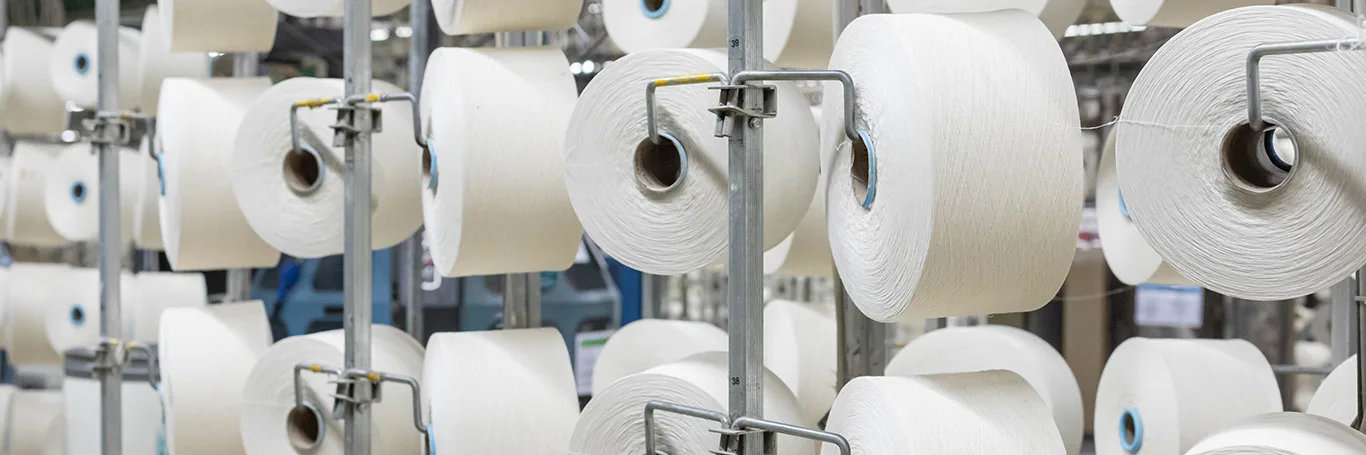
Open-end yarn is produced using the so-called rotor spinning process. In this process, the cotton fibres are first opened up and then twisted into yarn by a rapidly rotating rotor.
This process is significantly faster than traditional ring spinning and enables the cost-effective production of large quantities.
Characteristics of open-end yarn
• Mostly lower production costs
• High production speed
• Good dimensional stability
• Ideal for price-conscious products and large quantities
• Slightly coarser surface
• Compact feel
What is ring-spun yarn?
In ring spinning, the fibres are stretched several times and continuously twisted. As a result, the fibres are arranged in a much more orderly and denser manner within the yarn.
The result is a finer, more even and softer yarn, which is particularly often used for premium T-shirts.
Characteristics of ring-spun yarn
• Very soft and comfortable to wear
• Smoother fabric surface
• Greater yarn strength
• A higher-quality appearance
• Slightly higher production costs
• A slower manufacturing process
In addition to the type of yarn, other factors – such as the weight per unit area and the fineness of the yarn – naturally play an important role. Which type of yarn is the right choice ultimately depends on what is expected of the T-shirt and which criteria are most important to the buyer.
Printability:
When it comes to printability, there are no blanket advantages or disadvantages. Both open-end and ring-spun fabrics can deliver excellent print results. For most applications, it is not the type of yarn alone that plays the decisive role, but the interplay between the fabric, the printing process and the design.
Our Conclusion:
Open-end and ring-spun yarns are not a matter of ‘good’ or ‘bad’, but of the right application. For T-shirt manufacturers, this means that the choice of yarn should always be tailored to the requirements of the target audience and the desired market positioning of the product.
Here at Fruit of the Loom, we offer both open-end and ring-spun fabrics. With fabric weights ranging from 140 to 230 gsm, our T-shirt range covers a broad spectrum – from lightweight basic T-shirts to heavyweight premium products.